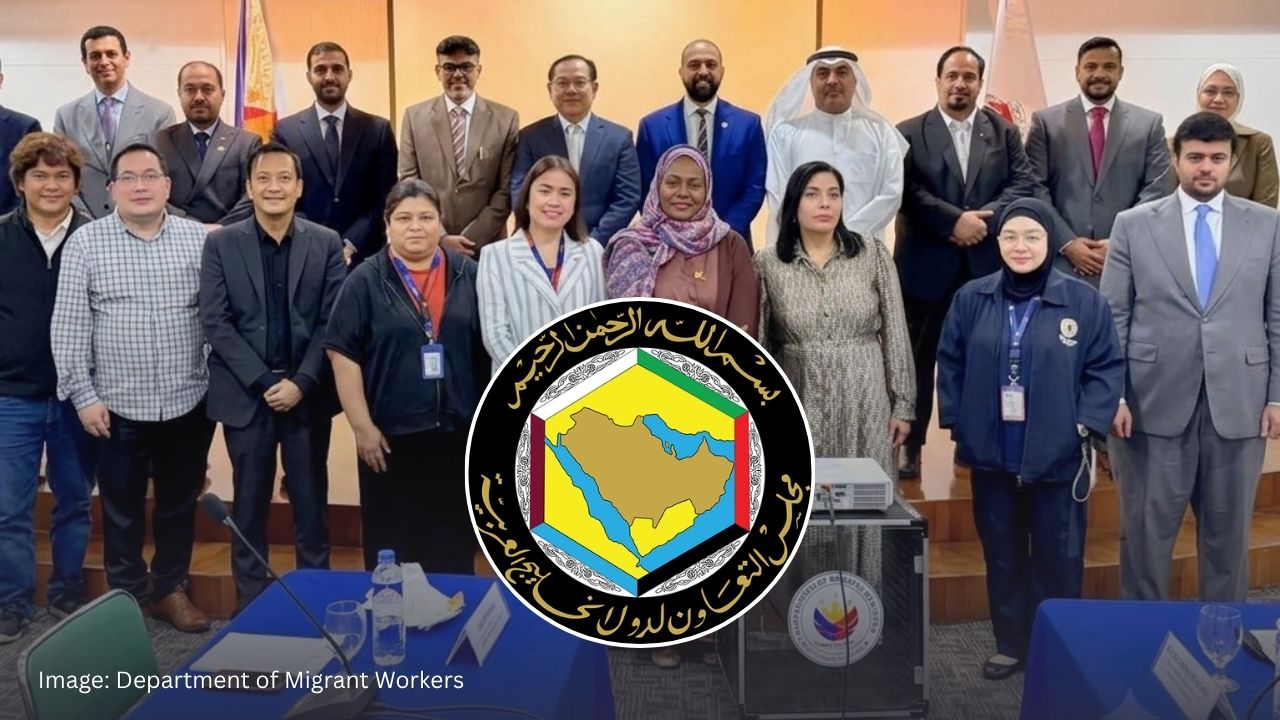
Officials from the Gulf Cooperation Council (GCC) Secretariat, the Gulf Health Council, and Embassy representatives met with the Department of Migrant Workers (DMW) on August 4, 2026, at the DMW Central Office to discuss improvements to the Wafid Programme—the Gulf region’s digital platform for managing mandatory pre‑deployment medical examinations for workers bound for GCC countries.
What the Wafid Programme Does
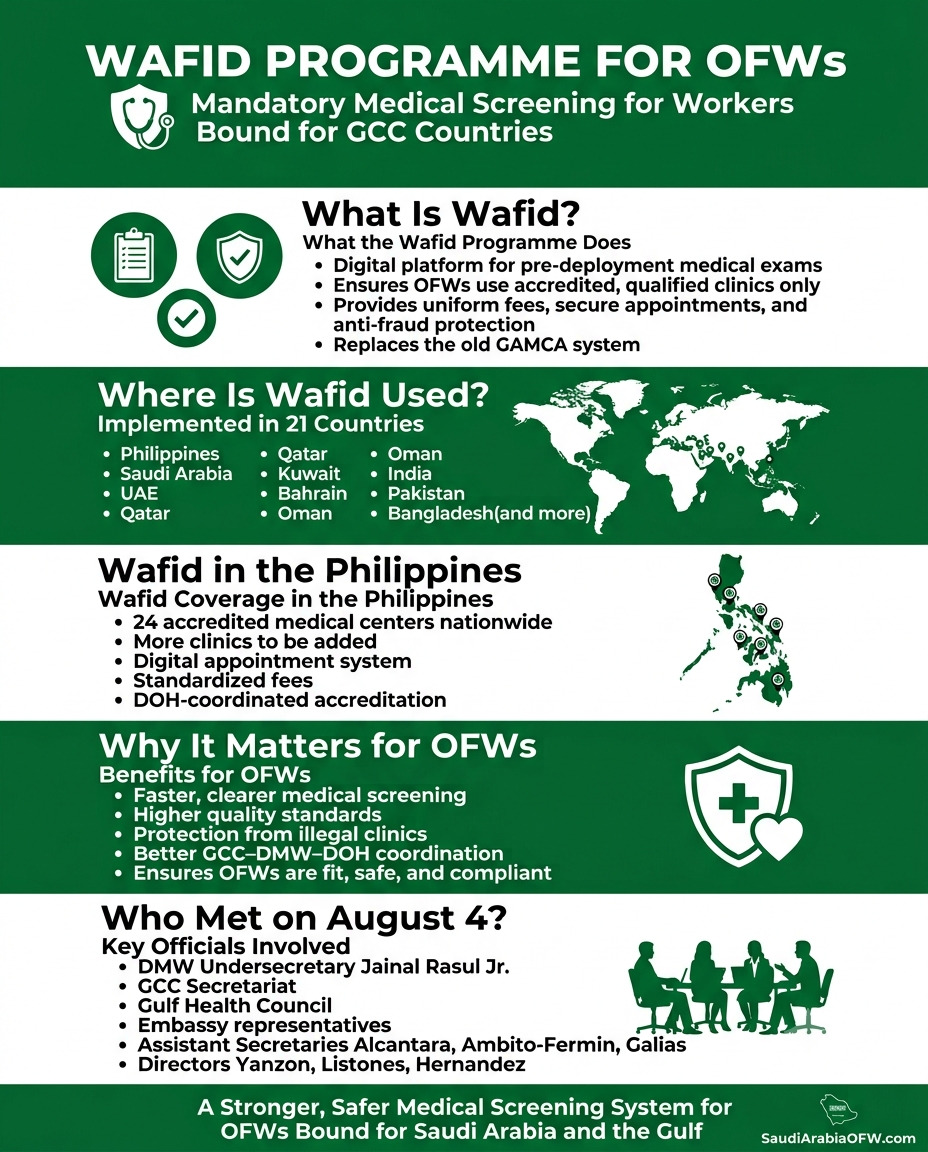
The Wafid Programme oversees the accreditation of medical facilities, the quality assurance process, and the digital appointment system for workers heading to GCC member states such as Saudi Arabia, UAE, Qatar, Kuwait, Bahrain, and Oman. It aims to prevent fraud, ensure uniform fees, and guarantee that OFWs undergo medical exams only in qualified and accredited clinics.
The GCC delegation reported that Wafid is now implemented in 21 countries, including the Philippines, India, Pakistan, and Bangladesh. In the Philippines alone, 24 accredited medical centers and clinics are currently operational.
Expansion of Accredited Clinics in the Philippines
During the meeting, the Gulf Health Council announced plans to increase the number of accredited clinics in the Philippines. This expansion aims to improve accessibility for OFW applicants, reduce bottlenecks in scheduling, and ensure that medical screenings meet GCC standards.
DMW officials emphasized the importance of coordination with the Department of Health (DOH) to ensure that all medical examinations are conducted by legitimate, properly accredited health facilities.
DMW’s Commitment to OFW Welfare
Undersecretary Jainal Rasul Jr. welcomed the GCC initiative, highlighting that accessibility, integrity, transparency, and uniformity of fees are essential to protecting OFWs. He stressed that the Wafid Programme must uphold credibility and fairness in the selection of clinics and the appointment system.
Assistant Secretaries Levinson Alcantara, Jules Ambito‑Fermin, and Maria Regina Galias, along with Directors Jerome Yanzon, Paul Listones, Celso Hernandez, and other DMW officers, also participated in the discussion—reaffirming the agency’s commitment to the welfare and protection of Filipino migrant workers.