Overseas Filipino workers in Saudi Arabia can use the Qiwa employment contract service to check whether their job terms match what their employer promised.
Qiwa is the Saudi government’s main digital platform for private-sector labor services.
It allows workers to view new, current, past, and upcoming employment contracts in one place.
The service also gives employees a chance to question incorrect details before accepting a contract.
Employer sends the contract through Qiwa
The employer starts the documentation process.
It enters the worker’s information and contract details, including the job title, duration, working hours, salary obligations, and additional terms.
The proposed contract is then sent to the worker’s Qiwa Individuals account.
According to the Saudi Ministry of Human Resources and Social Development, the contract becomes documented and approved by the ministry after both sides agree.
How workers can review a new contract
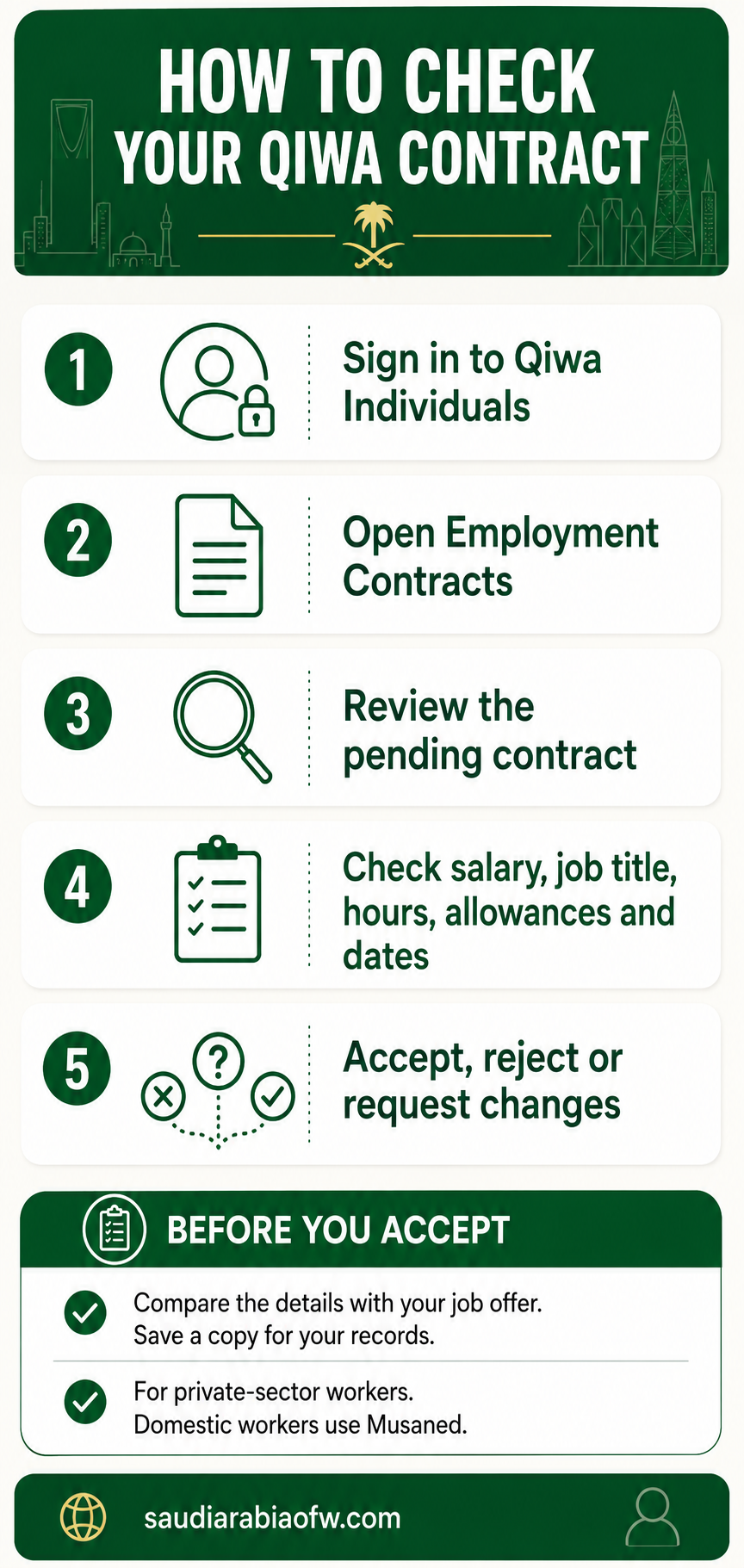
An OFW can sign in through the official Qiwa platform and open the employment contracts service.
The worker should look for a pending contract request and open it to review the full terms.
Qiwa gives the employee three choices:
- Accept the contract if all details are correct.
- Reject it if the offer should not proceed.
- Return it to the employer with a request for changes.
Workers should not accept a contract immediately without reading every section.
The official Qiwa guide explains how employees can review and respond to pending contracts.
Check more than the monthly salary
OFWs should compare the Qiwa contract with their job offer and any agreement processed before departure.
Check the basic salary, housing and transport allowances, job title, workplace, contract period, probation, working hours, leave, and renewal terms.
Also review any additional conditions that could affect resignation, transfer, or contract termination.
If a detail is missing or different, the worker can request a correction instead of approving it.
Screenshots and downloaded copies should be kept for personal records.
A documented contract may help protect wages
Saudi authorities have strengthened the legal value of certain contracts documented through Qiwa.
Under the government’s enforceable employment contract program, the wage section may cover basic pay, housing allowance, transport allowance, and other cash allowances.
Eligible workers with the required documented contract and execution number may use the Najiz platform when wages remain unpaid under the program’s rules.
Full unpaid wages may become eligible for enforcement after 30 days, while partial payment cases may qualify after 90 days, according to the Saudi ministry’s official announcement.
What OFWs should know before responding
The Qiwa employment contract service mainly applies to private-sector employees.
Domestic workers use separate employment services and regulations through Musaned.
OFWs who receive a contract request should compare every detail before choosing accept, reject, or request changes.
A documented contract creates a clear government record of the terms agreed upon by the worker and employer.